

 English
  Français
  Español
  Русский
  Português
How to Choose Leveling Feet for Heavy Industrial Equipment
Views : 87
Update time : 2026-03-31 14:06:22
Leveling feet, also known as leveling mounts or adjustable feet, are essential components in heavy industrial equipment. They ensure stability, reduce vibrations, and compensate for uneven floor surfaces. Choosing the right leveling feet can improve safety, prolong machinery life, and enhance operational efficiency. This guide will help you understand the key factors in selecting the perfect leveling feet for your heavy-duty equipment.
Why Leveling Feet Are Critical for Industrial Equipment
Heavy industrial machines like CNC machines, presses, conveyors, and packaging equipment require a stable base. Uneven floors or vibrations can lead to:
- Misalignment of machinery
- Premature wear and tear
- Noise and vibration problems
- Safety hazards for operators
Leveling feet solve these issues by providing a robust, adjustable support system that adapts to uneven floors.
Key Factors to Consider When Choosing Leveling Feet
1. Load Capacity
The first consideration is the weight of the equipment. Leveling feet must be rated to support the total load, including dynamic forces generated during operation. Overloading leveling feet can cause deformation or failure.
Tip: Always choose leveling feet with at least 25–50% higher capacity than the actual weight for safety.
2. Material Selection
Leveling feet come in various materials, each suited for different industrial environments:
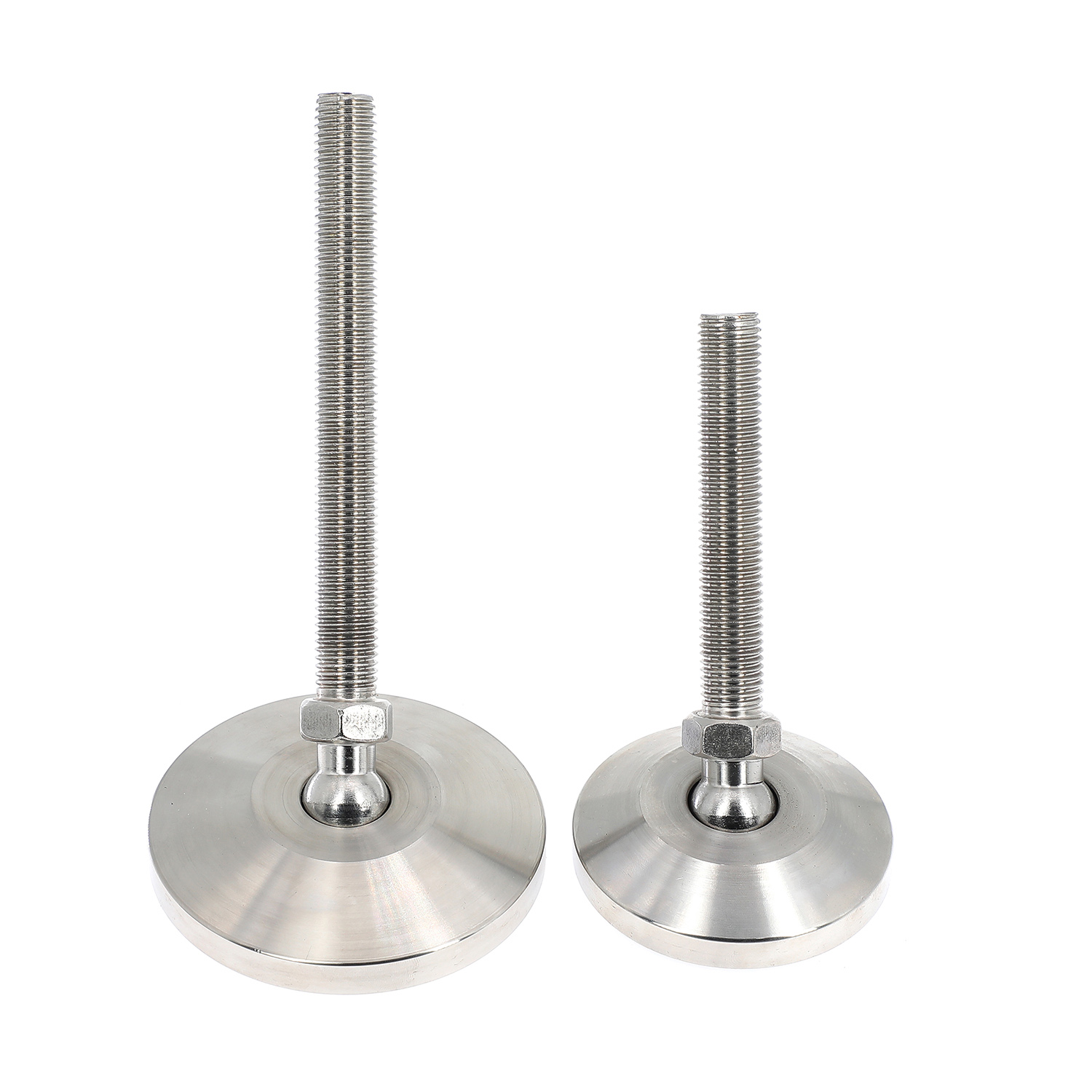
- Stainless Steel: Corrosion-resistant, ideal for food, pharmaceutical, or outdoor environments.
- Galvanized Steel: Strong and rust-resistant, suitable for general industrial use.
- Plastic/Polymer Pads: Protect floors and reduce vibration, often used in light-to-medium machinery.
3. Type of Adjustment
Different types of adjustment mechanisms are available:
- Threaded Leveling Feet: Simple, widely used, and easy to adjust.
- Swivel Leveling Feet: Can adjust to angled or uneven surfaces for more precise leveling.
- Lockable Leveling Feet: Include a locking nut or mechanism to maintain position under vibration.
4. Base Design
The base of leveling feet affects stability and vibration absorption:
- Round Base: Ideal for compact machines or equipment that may need repositioning.
- Square/Rectangular Base: Provides maximum stability for heavy machinery.
- Vibration-Damping Pads: Rubber or polymer pads can absorb vibration, reducing wear and noise.
5. Floor Compatibility
Consider the type of floor your equipment will rest on:
- Concrete floors may require larger or vibration-dampening pads.
- Tiled or epoxy-coated floors need non-marking bases to prevent damage.
6. Environmental Considerations
Heavy industrial environments can be harsh. Consider factors like:
- Moisture or chemical exposure
- Extreme temperatures
- Abrasive dust or debris
Selecting leveling feet resistant to these conditions ensures long-term performance.
Installation and Maintenance Tips
- Level Carefully: Use a spirit level or laser level for accurate adjustment.
- Regular Inspection: Check for loosening or wear over time, especially in high-vibration environments.
- Lubricate Threads: For threaded leveling feet, apply anti-seize or grease to simplify adjustments.
Conclusion
Choosing the right leveling feet for heavy industrial equipment is crucial for safety, performance, and longevity. Consider factors like load capacity, material, adjustment type, base design, floor compatibility, and environmental conditions. Proper installation and maintenance further enhance reliability and reduce downtime.
By selecting high-quality leveling feet designed for your specific machinery and environment, you can ensure your equipment remains stable, safe, and efficient for years to come.
Related News
Read More >>


