

 English
  Français
  Español
  Русский
  Português
M8 vs M10 vs M12 Leveling Feet: Size Selection Explained
Views : 1602
Update time : 2026-04-10 15:12:33
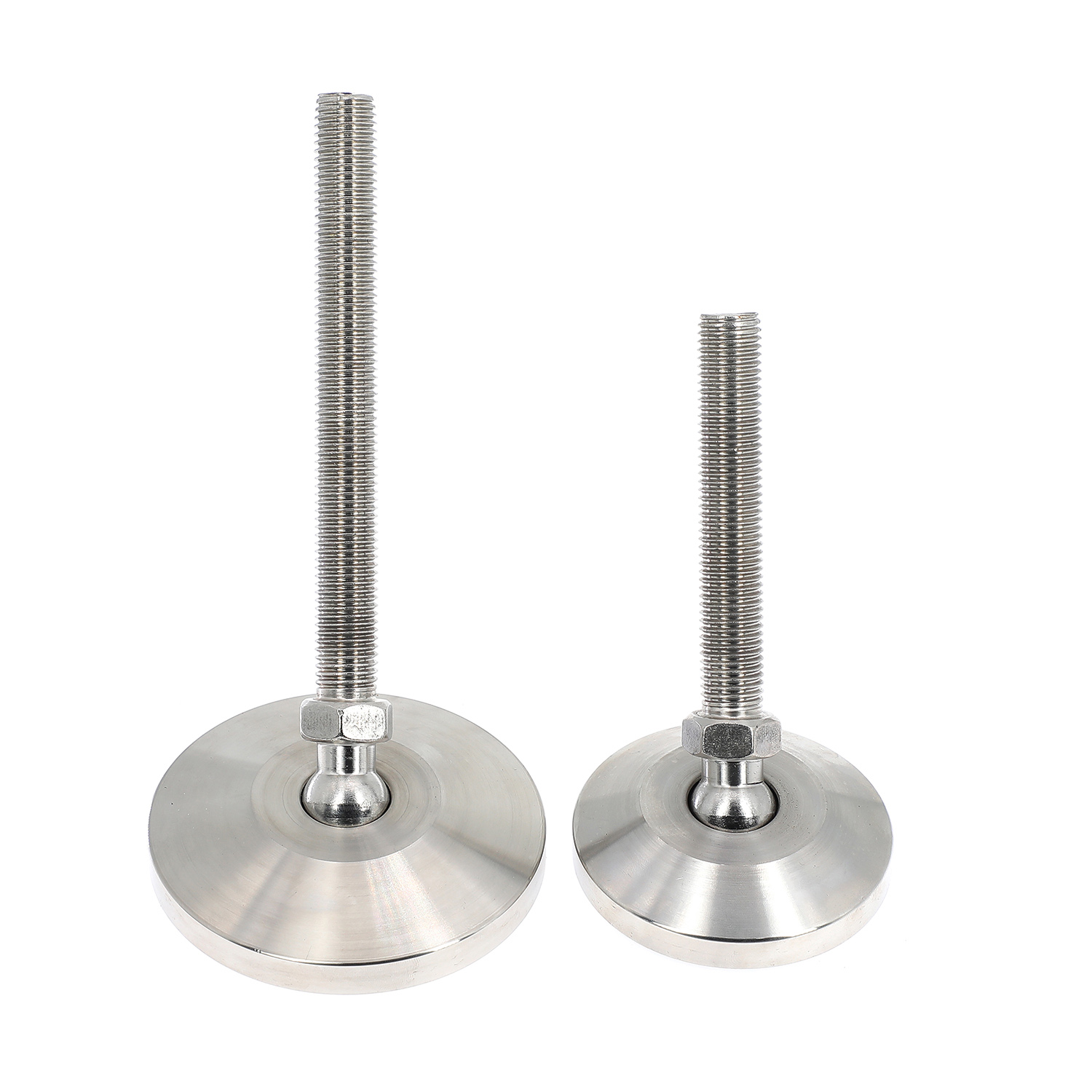
When selecting the right leveling feet for industrial equipment, furniture, or machinery, choosing between M8, M10, and M12 sizes is one of the most critical decisions. The correct size directly impacts load capacity, stability, and long-term performance. This guide explains the differences and helps B2B buyers, engineers, and distributors make the right choice.
What Do M8, M10, and M12 Mean?
The “M” designation refers to metric thread size, while the number indicates the diameter of the threaded rod:
M8 = 8 mm thread diameter
M10 = 10 mm thread diameter
M12 = 12 mm thread diameter
As the diameter increases, so do strength, load-bearing capacity, and durability.
Key Differences: M8 vs M10 vs M12
1. Load Capacity
M8 Leveling Feet
- Light-duty applications
- Typical load: 100–300 kg per foot
- Suitable for small equipment or furniture
M10 Leveling Feet
- Medium-duty applications
- Typical load: 300–600 kg per foot
- Common in workshop machines and commercial equipment
M12 Leveling Feet
- Heavy-duty applications
- Typical load: 600–1000+ kg per foot
- Ideal for industrial machinery and heavy structures
Key Insight: Always select a size with at least 20–30% higher load capacity than your actual requirement.
2. Stability and Vibration Resistance
- M8: Limited stability; not ideal for vibrating equipment
- M10: Balanced performance for moderate vibration
- M12: Excellent stability; best for heavy or dynamic loads
For machinery like CNC equipment or conveyors, M12 is usually preferred.
3. Thread Strength and Durability
Larger threads provide:
- Better resistance to stripping
- Higher torque tolerance
- Longer service life under repeated adjustment
M12 threads are significantly more durable in harsh industrial environments.
4. Adjustment Range
Although adjustment depends on stem length, larger sizes typically allow:
- Greater height adjustment
- Better load distribution during leveling
For uneven floors, M10 or M12 offers more flexibility.
Application-Based Selection Guide
Choose M8 If:
- Light furniture or cabinets
- Small appliances
- Display racks or retail fixtures
- Low-cost, high-volume applications
Choose M10 If:
- Medium machinery
- Workbenches or assembly tables
- Food processing equipment
- General industrial use
Choose M12 If:
- Heavy industrial machines
- Automation systems
- Conveyor lines
- Equipment with vibration or dynamic loads
Industry-Specific Recommendations
1. Manufacturing & Automation
M12 is the standard due to heavy loads and vibration.
2. Food & Beverage Equipment
M10 is commonly used for stainless steel adjustable feet.
3. Furniture & Light Equipment
M8 is sufficient and cost-effective.
Material Considerations
Beyond size, material also matters:
Carbon Steel (Zinc-Plated): Cost-effective, general use
Stainless Steel (304/316): Corrosion-resistant, food-grade environments
Nylon Base / Rubber Pad: Anti-slip and floor protection
For outdoor or wet environments, stainless steel M10 or M12 is recommended.
Common Mistakes to Avoid
Undersizing the thread
Leads to bending or failure under load
Ignoring dynamic loads
Machines with vibration require larger sizes
Not matching thread size with equipment
Always confirm internal thread compatibility
Overlooking safety margins
Never operate at maximum load capacity
Final Thoughts
Choosing between M8, M10, and M12 leveling feet is not just about size—it’s about ensuring safety, durability, and performance.
Go with M8 for lightweight and cost-sensitive applications
Choose M10 for versatile, mid-range industrial use
Select M12 for maximum strength and demanding environments
For B2B buyers and wholesalers, offering all three sizes ensures coverage across different industries and customer needs, increasing both market reach and sales potential.
Related News
Read More >>


